

Bypass Trust A Bypass Trust allows you to provide for your surviving spouse and leave assets to your children, without the burden of estate taxes. Some BackgroundAs of 2023, the federal estate tax exemption is $12,920,000. This means estates valued below that number are exempt from the federal estate tax. The value of an estate
Blog
Rethinking IRS Penalty Assessments: A Deep Dive into the Farhy v. Commissioner Ruling

Farhy v. Commissioner In a recent landmark ruling, Farhy v. Commissioner, the Tax Court has significantly changed penalty assessments under I.R.C. Section 6038(b) of the Internal Revenue Code. This ruling, rendered on April 3, 2023, carries significant implications for a broad range of taxpayers, potentially offering a basis to challenge or request refunds for penalties
What You Need to Know About FinCEN Form 105 – Importing Currency into the United States
What You Need to Know About FinCEN Form 105 As a city with a direct border to Mexico, San Diego is a popular destination for our Mexican neighbors who need to know about the FinCen Form 105 in order to bring currency into the United States for business or personal use. Those planning to import
Leveraging the Benefits of Form 8833 for International Tax Treatment
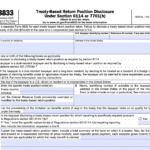
The International Tax Law Team at RJS LAW receives numerous inquiries regarding a crucial yet often misunderstood element of United States tax law — IRS Form 8833, or the Treaty-Based Return Position Disclosure. For taxpayers engaged in global transactions, Form 8833 is significant as cross border transactions are often regulated by international tax treaties. What
What is Step-Up Basis and How is it Beneficial for Trusts and Estates?

What is Step-Up Basis and How is it Beneficial for Trusts and Estates? Step-up basis allows for the tax basis to be stepped up to fair market value upon the transfer of an asset at death. What is basis? The IRS defines basis as “the amount of your capital investment in property for tax purposes.”
Understanding IRS Notices: Notice of Intent to Seize or Levy Your Property, CP504 Notice and CP504B Notice

The IRS CP504 Notice and CP504B Notice We continue our series on IRS notices by discussing the Notice of Intent to Seize (Levy) Your Property or IRS CP504 or CP504B Notice. While the verbiage of this notice can be somewhat confusing and cause some undue alarm, this blog post will discuss what the notice means
What happens if I did not file an FBAR? Can I do a Streamlined Procedure?

Introduction: Streamlined Procedure As an attorney specializing in international tax law, it is crucial to understand the consequences and available options for individuals who have failed to file their Foreign Bank and Financial Accounts (FBAR) reports. Failure to comply with FBAR reporting requirements may result in severe penalties. Fortunately, the Internal Revenue Service (IRS) offers
Understanding IRS Notices: IRS CP14 Notice or IRS Amount Due Notice

IRS CP14 Notice This next series of blogs will provide an understanding of some of the various notices the IRS issues to Taxpayers. First on the list is the IRS Amount Due or IRS CP14 Notice. The notice may also be referred to as a “Notice and Demand.” Many IRS tax cases start with an
You are the Boss and We Help Bosses – An Employer’s Guide to Payroll Taxes and California EDD Audits

Payroll Taxes and California EDD Audits – Part 3 – Forms to Fill This next installment of our Payroll Tax Blog will discuss the forms an employer must file in California to comply with federal (IRS) and state (EDD) payroll tax obligations. While California EDD Audits are a common challenge faced by businesses, a lack
Frivolous Tax Returns Can Be a Serious Matter

Frivolous Tax Returns The IRS can charge penalties of $5,000 for Frivolous Tax Returns and other Frivolous submissions made to the IRS. The US Tax Court may impose penalties of up to $25,000 when a Taxpayer makes frivolous arguments in Tax Court. A list of some of the frivolous arguments that can lead to penalties